St. Patrick's Story
(It's not about the stout.)

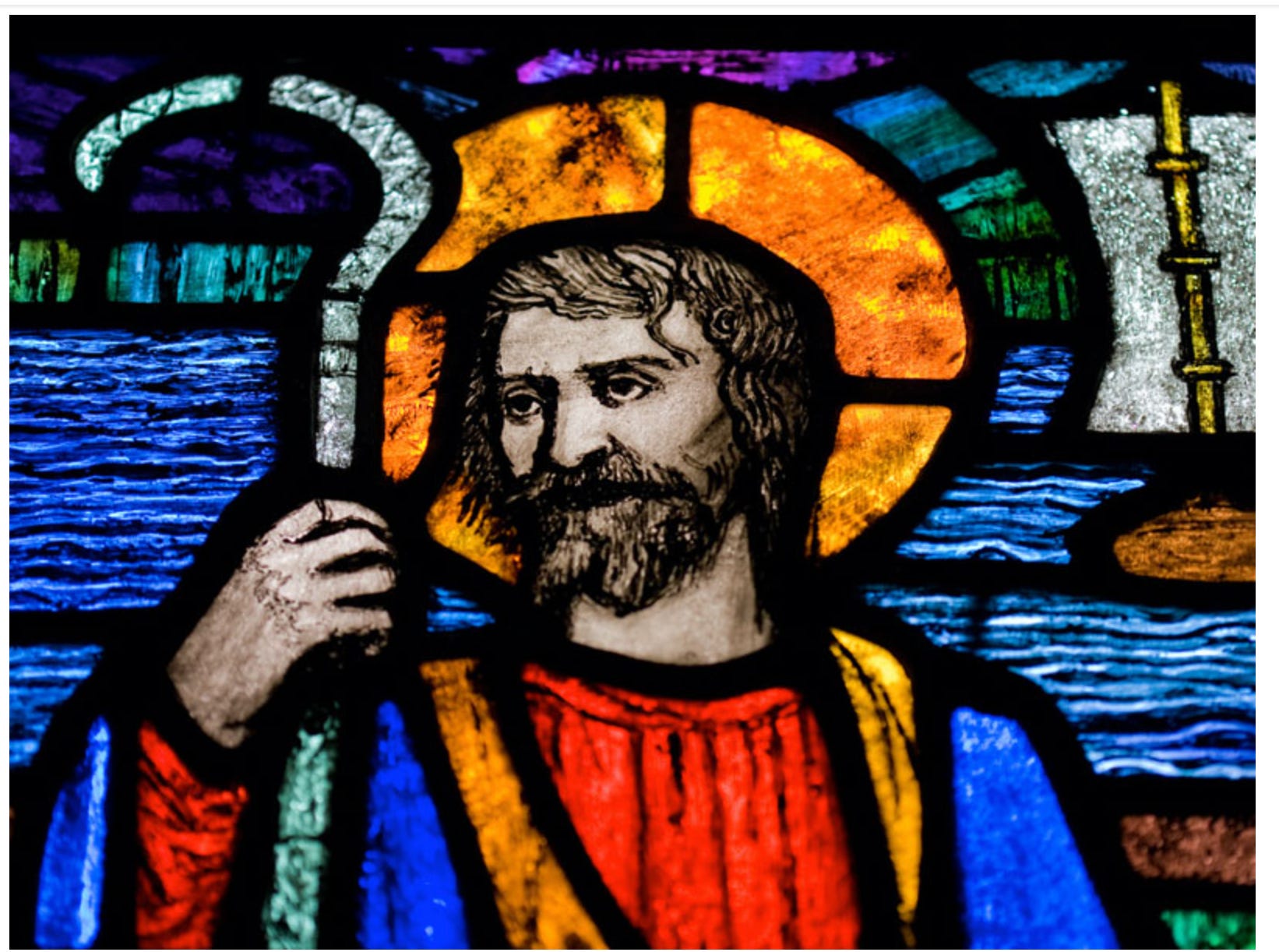
Confession is a core practice among devout Catholics. I am not in that club (though I am a believer), but feel compelled to confess anyway: I wrote the piece below for the March 17 edition of Coffey Grounds and somehow never hit the send button. Now I know why the reader response was non-existent. Was this a lame mistake? It certainly was. But I am owning it, and now I feel a little lighter.
Here’s the story of St. Patrick. Pretend it’s three days ago, please.
As the Guinness flows and the pubs fill and vast swaths of the world turn green today, we pause to honor the godly man responsible for all the fuss. He is the patron saint of Ireland, quite a feat considering that St. Patrick, among the most renowned Christian figures the world over, was not even Irish. He has some story to tell.
Born to a well-to-do family in Roman Britain in 387 AD, St. Patrick’s given name was Maewyn Succat. (He became St. Patrick only after he was ordained as a bishop.) He was captured on the grounds of his family’s estate by a marauding band of pirates and taken to Ireland around the age of 16 (though some accounts say that he was 14.) For six years, he worked as a slave, herding and tending to sheep, alone in the pasture with his worrisome thoughts and uncertainty about what would become of his life. Ireland then was a land of pagans and Druids, ancient Celtic spiritual sages, and though the young man was not a particularly devout Christian, he turned to prayer for comfort and hope, as he wrote in his memoir, The Confession:
“The love of God and his fear grew in me more and more, as did the faith, and my soul was rosed, so that, in a single day, I have said as many as a hundred prayers and in the night, nearly the same. I prayed in the woods and on the mountain, even before dawn. I felt no hurt from the snow or ice or rain.”
In a vision he believed was straight from God, Patrick was told to head towards the coast and return to Britain. A ship would be waiting for him. He escaped from his captors and walked 200 miles from County Mayo and, arriving at the promised ship, convinced the sailors to allow him on board for the voyage back to his homeland. Several years later, he had another vision, this time of an angel carrying a letter. As Patrick started to read it, he heard a voice beseeching him to return to Ireland, this time as a missionary.
“We appeal to you, holy servant boy, to come and walk among us,” the voice said.
Saved by the grace of God, St. Patrick knew that the voice must be heeded. He devoted years of study to the Bible and was ordained as a priest by his teacher, St. Germanus, the Bishop of Auxerre in Gaul. He returned to Ireland around 432 AD and now a bishop himself, spent the next 30 or so years ministering to the few Christians he encountered, sharing the Gospel and converting thousands of new believers to the faith. Because he spoke the language and understood Irish culture, St. Patrick was able to invoke powerful indigenous symbols to connect with people. He explained the Holy Trinity by using a three-leaf clover – i.e., a shamrock. The sun was a symbol of power and reverence; Patrick would superimpose it on the Christian cross to create what is commonly known as the Celtic cross. Because the Irish often used fire to honor their gods, Patrick would celebrate Easter, and Jesus’ resurrection, with a bonfire.
More than a thousand years later, in 1631, the date of St. Patrick’s death – March 17 – was declared a sacred occasion, a faith-based day of feasting – and a break from Lenten moderation. It was in the U.S. that the festivities took on a more secular flavor, marked by parades, pints and a celebration of Irish culture, particularly after the massive influx of Irish immigrants in the 19th century. So go ahead and raise a glass to St. Patrick, the patron saint of Ireland, today, remembering that it all originated with a lost shepherd boy who prayed and prayed, and whose prayers were answered.
Interesting story, albeit a few days late. I’ve heard a number of stories, but none ring more true than yours.
Fascinating…