
A Blooming Miracle
A Mother's Day parable. It may grow on you.

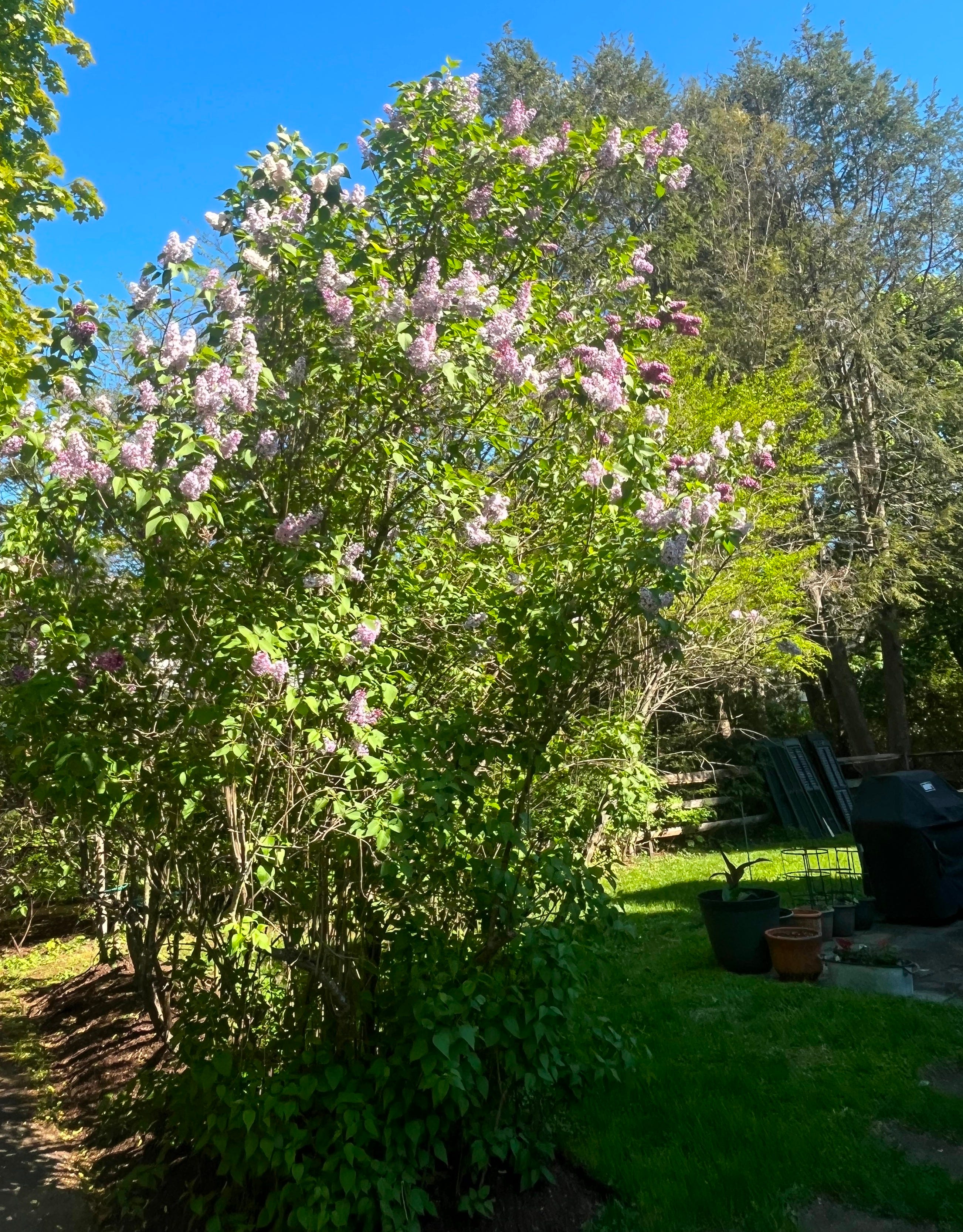
Twenty-five years ago, we moved into our dream house in a hamlet not far from the Hudson River. It was built in 1860. We know this because the year was etched into a beam we found beneath a piece of clapboard. The house is a white colonial with Victorian flourishes, including a columned porch, dentil moulding and scalloped trim.
I love history and old things, and it’s cool to live in a place that predates the Civil War. The house made me weak in the knees when I first saw it - that’s how much I loved it. And yet, when we moved in, I had a stubborn case of Envy.
Lilac Envy.
Yeah, I know. How absurd and petty can you get? Go ahead and tell me this is the epitome of a first-world problem. How can I argue?
I mean, Lilac Envy?
Really?
Our property had two lovely dogwoods, a cherry tree, an apple tree and a clematis plant climbing up a lamp post. Two azaleas, red and pink, gave seasonal color to the front yard, and a row of forsythia provided a few weeks of bright yellow in the early spring. We had a horticultural bounty on .4 acres. But there was not a lilac to be found. I love lilacs. They don’t bloom for more than a couple of weeks in these parts, but when they do, it’s an explosion of deep purple and lavender and white, and the fragrance is almost impossibly sweet, way better than anything you could ever find in a bottle.
The envy? Just beyond the hedge that divides our property from our neighbors were 10 or 12 fully grown, bursting-with-blooms lilac trees. They were stunning, and I won’t lie; I coveted my neighbors’ lilacs.
The coveting didn’t get too out of hand, mostly because our neighbors, generous and kind-hearted people, told us we could help ourselves to the blooms whenever we felt so moved. I felt so moved often, but what I wanted more than anything was my own row of lilac trees.
So on the first Mother’s Day we were in the house, our three kids and I gave my wife a gift we knew would touch her: a couple of little lilac trees. (Am I clever or what?) They were only three or four feet tall, with no more than a bloom or two, but she was delighted, and that was all that mattered. I dug a couple of holes, tossed in some peat moss, plopped them in the ground. I gave them a good soaking of water and then took a few steps back to take them in in all their scrawniness. I am no expert gardener, by any means. I wondered if these humble sprigs would ever attain the size and splendor of my neighbors’. I doubted it.
Over the next few years, I planted a few more lilacs in the same row as the first two. One was a Bloomerang, so-called because it blooms more than once, and two were the ‘Sensation’ varietal, with white fringe around magenta flowers, making them look as if they were dipped in lace.
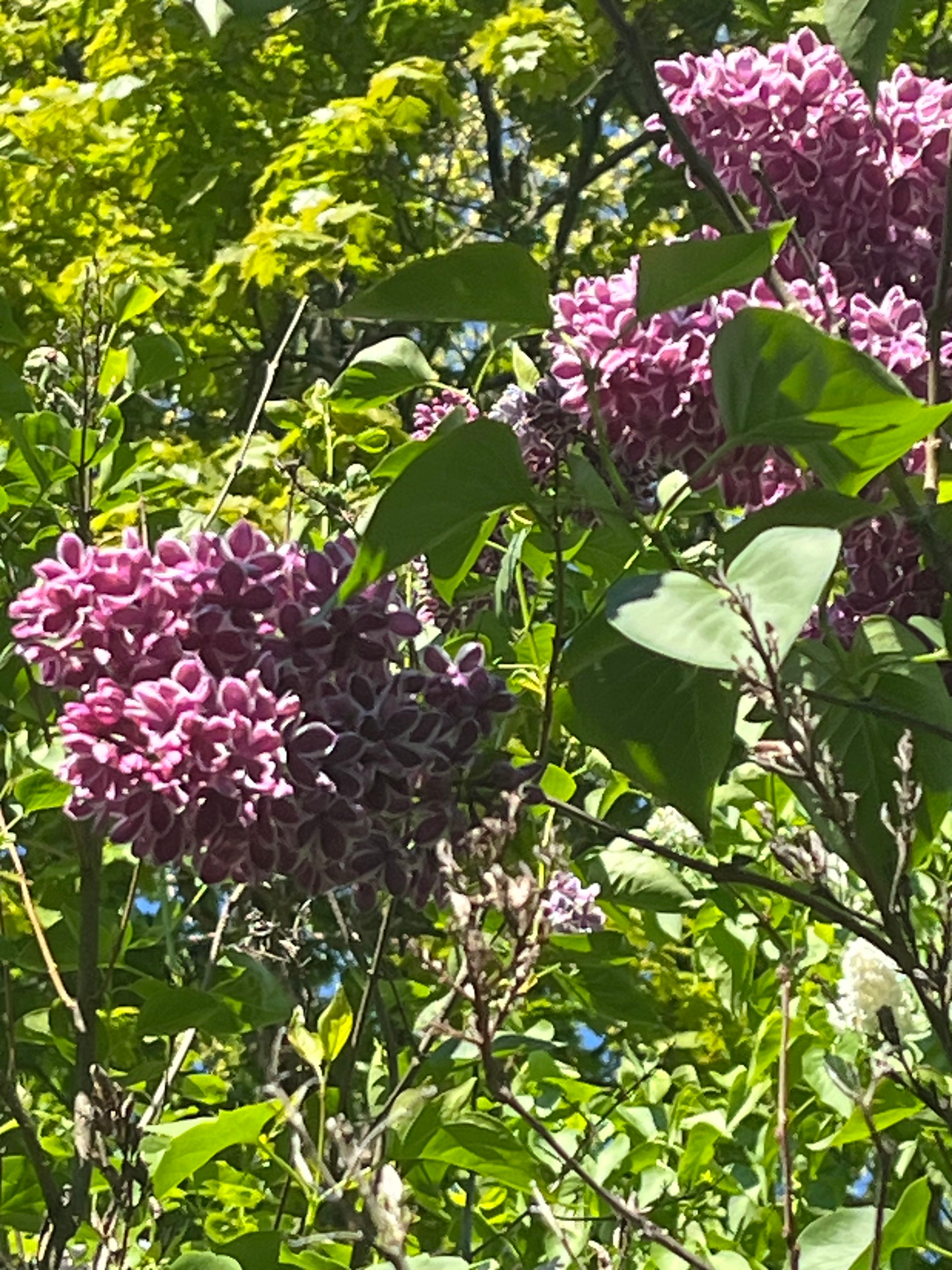
So here we are in 2026, and another Mother’s Day is upon us, and one thing I can promise you is that I won’t be giving my wife a lilac, because we have a hedgerow of them, almost 20 feet tall, with hundreds of blooms and a bouquet that fills the whole backyard. Not to brag, but they are just as redolent and majestic as the ones that triggered my envy all those years ago.
This is not a story about lilacs, though. It’s a story about growth, about how in so many instances it happens incrementally, imperceptibly, without us ever being aware it is happening. Your nails are growing as you read this. Your hair, too. You don’t experience it in the moment, but then a day comes when you need a nail clipper or a trip to the barber shop or salon, or you are blowing out a whole bunch more candles on your birthday cake. Little, lapping waves eventually become high tide, even if in the moment each little lap doesn’t seem significant. I remember talking to my late father-in-law, the great Edward J. Will Jr., about his experience in Alcoholics Anonymous. He had 45 years sobriety when he passed, and he’d tell you that the only way it happened was choosing not to have a drink one day at a time. You can’t get decades of sobriety all at once. That’s not how it works. When he was newly sober, he wasn’t sure he’d get through the afternoon. He stopped worrying about whether he’d ever have the months or years or decades of sobriety that his friends in the program had. Instead, he decided not to have a drink today. His growth in sobriety happened without fanfare, or parades. He simply kept at it. His 45 years were richly earned.
“The best time to plant a tree was 25 years ago,” said Eliud Kipchoge, the iconic Kenyan marathon runner. “The second-best time to plant a tree is today.”
Which brings me back to my lilacs. After my initial gloom that they would ever amount to anything, I stopped obsessing about it and just let life happen. Let growth happen. Every few years, I would stop and notice how the lilacs weren’t seedlings anymore and then continue on my way, but the other day, for some reason, the marvel of growth hit me like a tsunami. I was walking through the backyard when my senses stirred to life. The redolence of the lilacs was overpowering. The canopy of blooms, purple majesty embroidered with white lace, towered over me. It blew me away.
How did that happen? I thought. How did something once so humble become this?
It’s a question I ask myself often when I am starting on a new book. For me, few things are more terrifying than Day 1 of the process, when your screen is blank and you have 100,000 words to go and you have all these phrases and thoughts swirling in your brain. You have no idea where to go, or where to hide. You are all but paralyzed. You think about how you’ve should’ve been a plumber, and convince yourself that no writer has ever felt this overwhelmed when the truth is that every writer or painter or sculptor has very much the same feelings at the outset of the creative process.
So what do I do? I set the bar low, really low. I say to myself, “What would be a sentence?” It doesn’t have to be a good sentence. It might be an awful sentence, and it might never appear in published form, but I peck it out anyway, and then I write another sentence that might be even worse. I have no clue where this is going, but it is going, and that’s way better than being stuck. When I get in a groove, I will often write 3,000 or 3,500 words in a day, but when I’m just starting out, I tell myself, Hey, no pressure. Five hundred words would be fine.
If you write 500 words a day, in two days you will have 1,000 words. In 20 days, you will have 10,000 words. You get out of the way and let the growth continue, and in 200 days, you will be typing, “The End,” words that are almost as sweet as the smell in my backyard.
This was a beautiful piece of work, Mr Coffey… I believe I’ll be reading it again…
That was beautifully written, but I did not sign up for this newsletter, yet it popped up in my inbox anyway.